Doctor-reviewed guide
Understand your cycle before you panic.
Learn what is normal, what is not, and when irregular periods need proper gynecological evaluation.
🩺 Quick Answer
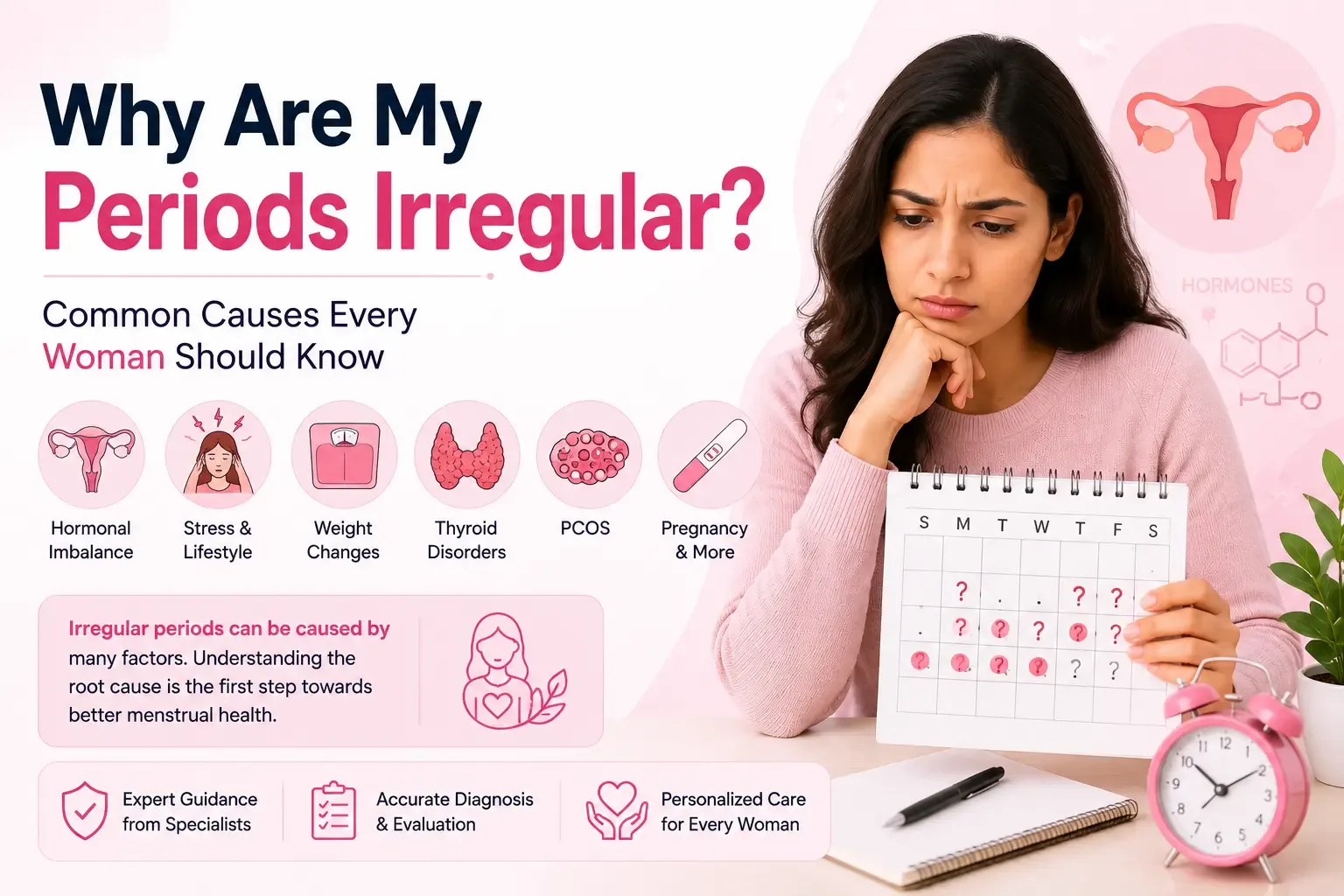
Periods are considered irregular when they come less than 21 days apart, more than 35 days apart, are frequently missed, or vary significantly from month to month. Common causes include PCOS, stress, thyroid disorders, pregnancy, sudden weight changes, excessive exercise, medications, perimenopause, and hormonal imbalance. If this pattern continues, a consultation with the best female gynaecologist in Jaipur can help identify the exact cause and guide the right treatment.
Have your periods suddenly become late, early, heavy, or unpredictable? First, take a breath. One delayed period does not always mean something serious. Your menstrual cycle is sensitive to stress, sleep, weight, illness, hormones, and pregnancy. But if irregular periods keep happening, it is important to understand the reason instead of guessing.
Doctor’s Note
In my clinical practice, the most common reasons women visit for irregular periods are PCOS, stress-related hormonal changes, thyroid imbalance, sudden weight changes, and pregnancy-related concerns. Many patients wait for months thinking the cycle will correct itself. Sometimes it does, but persistent irregularity should be evaluated because it may affect fertility, bleeding patterns, and overall reproductive health.
What Are Irregular Periods?
Irregular periods mean your menstrual cycle does not follow a predictable pattern. This may include periods coming too early, too late, skipping months, bleeding much heavier than usual, or changing significantly from one cycle to another.
What Is a Normal Menstrual Cycle?
A normal menstrual cycle usually ranges from 21 to 35 days, counted from the first day of one period to the first day of the next period. Bleeding commonly lasts around 3 to 7 days. A few days of variation can be normal, especially during stress, illness, travel, or lifestyle changes.
When Are Periods Considered Irregular?
Your periods may be considered irregular if:
- Your cycle is repeatedly shorter than 21 days.
- Your cycle is repeatedly longer than 35 days.
- You miss periods without pregnancy.
- Your cycle length keeps changing significantly every month.
- Your bleeding becomes unusually heavy, prolonged, or painful.
Normal Range
21–35 days between periods is generally considered normal for most women.
Common Variation
A small monthly shift can happen because of stress, travel, sleep changes, or illness.
Needs Attention
Repeated missed cycles, heavy bleeding, or severe pelvic pain should not be ignored.
Common Causes of Irregular Periods
Irregular periods can happen due to natural life stages, contraception, lifestyle factors, or underlying medical conditions. The key is to identify whether it is temporary or recurring.
Hormonal Changes and Life Transitions
Puberty: During the first few years after menstruation begins, cycles can be unpredictable because the brain-ovary hormone system is still maturing.
Perimenopause: In the years before menopause, estrogen and progesterone levels fluctuate, which can cause skipped, heavy, or irregular periods.
Pregnancy: A missed period is often one of the first signs of pregnancy. If you are sexually active and your period is late, take a home pregnancy test first.
Breastfeeding: Prolactin, the hormone involved in milk production, can delay ovulation and postpone the return of regular periods.
Contraception and Medications
Birth control pills and hormonal devices: Starting, stopping, missing, or changing hormonal contraception can cause spotting, delayed bleeding, lighter periods, or missed periods.
Other medications: Some antidepressants, thyroid medicines, steroids, blood thinners, and chemotherapy medicines may affect menstrual patterns.
Lifestyle Factors
Stress and anxiety: High stress can affect the brain signals that regulate ovulation. This may delay ovulation and make the period late.
Weight gain or weight loss: Sudden weight changes can disturb estrogen levels and affect ovulation.
Excessive exercise: Overtraining without enough nutrition may reduce hormone signals needed for regular periods.
Poor sleep and diet: Irregular sleep, poor nutrition, and high processed-food intake can worsen hormonal imbalance symptoms in some women.
Underlying Medical Conditions
PCOS: Polycystic Ovary Syndrome is one of the most common reasons for irregular periods. It may cause delayed ovulation, acne, weight gain, excess facial hair, and fertility issues. Read more about irregular periods due to PCOS.
Thyroid disorders: Both hypothyroidism and hyperthyroidism can affect metabolism, energy levels, weight, and menstrual flow.
Uterine fibroids or polyps: These non-cancerous growths can cause heavy bleeding, prolonged bleeding, cramps, and irregular spotting. You can also explore the clinic’s Fibroids Clinic for related care.
Signs of Hormonal Imbalance in Women
Hormonal imbalance happens when there is too much or too little of hormones such as estrogen, progesterone, thyroid hormones, insulin, or androgens in the bloodstream. Period changes are often one of the first visible signs.
| Symptom Area | Possible Signs | Why It Matters |
|---|---|---|
| Menstrual cycle | Irregular, missed, very light, or heavy periods | May suggest ovulation or hormone imbalance |
| Skin and hair | Adult acne, hair thinning, excess facial hair | Common in PCOS and androgen imbalance |
| Weight | Sudden weight gain or difficulty losing weight | May relate to thyroid or insulin issues |
| Mood and sleep | Anxiety, fatigue, insomnia, night sweats | May occur with stress, thyroid changes, or perimenopause |
| Physical discomfort | Bloating, hot flashes, vaginal dryness, low libido | May need evaluation if persistent |
Concerned about repeated cycle changes?
Book a menstrual health consultation with Dr. Charulata Bansal.
Can Irregular Periods Affect Fertility?
Yes, irregular periods can affect fertility if they are linked to irregular ovulation or anovulation, which means the ovary does not release an egg regularly. This is commonly seen in PCOS, thyroid disorders, high prolactin levels, low body weight, or severe stress.
If periods are irregular and you are trying to conceive, tracking ovulation can become difficult. In such cases, a gynecologist may recommend hormonal tests, ultrasound monitoring, ovulation tracking, or fertility-focused treatment. Learn more about fertility problems in women and available treatment options.
Can Irregular Periods Be a Sign of Pregnancy?
Yes. A missed or delayed period can be an early sign of pregnancy, especially if you are sexually active. Some women may also notice mild spotting, breast tenderness, nausea, tiredness, or cramps around the time their period is expected.
However, spotting is not always pregnancy-related. It can also happen due to hormonal changes, infections, or cervical causes. If your period is late, take a home pregnancy test. A positive result means it is important to begin timely pregnancy care If the result is negative but your periods continue to be irregular, consult a doctor for further evaluation.
Irregular Periods in Teenagers vs Adult Women
Irregular periods are not interpreted the same way at every age. What may be normal for a teenager may need evaluation in an adult woman.
| Age Group | What Can Be Normal | When to Check |
|---|---|---|
| Teenagers | Irregular cycles during the first 1–2 years after periods start | Very heavy bleeding, severe pain, no periods for several months, or symptoms of PCOS |
| Adult women | Small variations of a few days | Sudden irregularity, missed cycles, heavy bleeding, fertility concerns, or pelvic pain |
| Perimenopause | Cycle changes during the years before menopause | Very heavy bleeding, bleeding after sex, or bleeding after menopause |
For younger girls with ongoing cycle problems, irregular periods in teenage girls should be evaluated with age-appropriate care and reassurance.
Symptoms That May Need Medical Attention
A late period alone may not be dangerous, but certain signs should not be ignored.
- Heavy bleeding: Soaking a pad every hour for several hours or passing large clots.
- Severe pelvic pain: Pain that affects daily activities or does not improve with usual pain relief.
- Bleeding for more than 7 days: Prolonged bleeding may need evaluation.
- Cycles shorter than 21 days or longer than 35 days: Repeatedly falling outside this range should be checked.
- Bleeding between periods or after intercourse: This should be discussed with a gynecologist.
- Abnormal discharge: Foul smell, itching, yellow/green discharge, or persistent white discharge after periods may suggest infection.
When Should You See a Gynecologist?
You should consult a gynecologist if:
- You miss three or more periods in a year without pregnancy.
- Your previously regular periods suddenly become irregular.
- You have very heavy bleeding or severe cramps.
- You bleed between periods or after sex.
- You are trying to conceive and periods are irregular.
- You have symptoms like acne, facial hair, weight gain, hair fall, or thyroid concerns.
How Doctors Diagnose Irregular Periods
A gynecologist does not treat irregular periods by guessing. Diagnosis usually starts with understanding your cycle pattern, symptoms, medical history, weight changes, stress, medications, sexual history, and pregnancy possibility.
Physical Examination
Your doctor may check weight, blood pressure, signs of hormonal imbalance, and perform a pelvic examination if needed.
Hormonal Tests
Common tests may include thyroid profile, prolactin, FSH, LH, androgen levels, blood sugar, insulin resistance markers, and pregnancy testing. These hormonal tests help identify the root cause.
Pelvic Ultrasound
A pelvic ultrasound helps evaluate the uterus, ovaries, ovarian cysts, fibroids, endometrial thickness, and PCOS-related changes. Your doctor may suggest ultrasound for irregular periods when symptoms require imaging.
Treatment Options for Irregular Periods
Treatment depends on the reason behind the irregular cycle. The same medicine or approach does not work for every woman.
Lifestyle Changes
For stress, sleep disturbance, sudden weight change, or poor routine, lifestyle correction can improve cycle regularity. This may include balanced meals, regular sleep, moderate exercise, and stress management.
Hormonal Treatment
Doctors may prescribe cyclic progesterone, combined oral contraceptive pills, or other hormonal medicines depending on symptoms, age, pregnancy plans, and diagnosis.
PCOS Management
If PCOS is the cause, treatment may include weight management, insulin resistance control, cycle regulation, acne/hair treatment, and ovulation support if pregnancy is planned. Visit the PCOS treatment page for related care.
Treatment for Thyroid Disorders
If thyroid imbalance is detected, thyroid medicines can often help restore regular cycles over time.
Tips to Maintain a Healthy Menstrual Cycle
- Track your cycle: Use a period tracking app or calendar.
- Eat balanced meals: Include protein, fiber, healthy fats, fruits, and vegetables.
- Manage stress: Yoga, breathing exercises, walking, and mindfulness can help.
- Sleep well: Aim for consistent sleep timing.
- Exercise moderately: Avoid both inactivity and extreme overtraining.
- Avoid self-medication: Hormonal tablets should not be taken without medical advice.
Medical References
This article has been prepared using clinical gynecology experience and patient education references from trusted medical sources such as Cleveland Clinic, NHS, and Healthdirect Australia. This content is educational and does not replace a personal consultation.
FAQs
Can stress delay periods?
Yes. High physical or emotional stress can affect the brain signals that control ovulation, which may delay periods or sometimes cause a missed cycle.
Can PCOS cause irregular periods?
Yes. PCOS is one of the most common causes of irregular periods because it can interfere with regular ovulation and hormone balance.
How many delayed periods are normal?
A single delayed period can happen because of stress, illness, travel, or lifestyle changes. If periods are repeatedly delayed, missed for two or more cycles, or become unpredictable, medical evaluation is recommended.
Can pregnancy stop periods?
Yes. Pregnancy is one of the most common reasons for a missed period. If you are sexually active and your period is late, take a pregnancy test first.
When should I worry about irregular periods?
You should worry if your cycles are consistently shorter than 21 days or longer than 35 days, bleeding is very heavy, periods stop for several months, or you have severe pelvic pain, fever, or bleeding between periods.
What is the main cause of irregular periods?
The main cause is often hormonal imbalance, commonly related to PCOS, thyroid disorders, stress, weight changes, pregnancy, perimenopause, or lifestyle factors.
How do I fix my irregular cycle?
Treatment depends on the cause. A doctor may recommend lifestyle changes, stress management, weight control, hormonal medicines, thyroid treatment, PCOS management, or further tests such as hormonal blood tests and pelvic ultrasound.
How irregular is a normal period?
A normal menstrual cycle usually ranges from 21 to 35 days. A few days of variation can be normal, but cycles that frequently fall outside this range or vary widely month to month are considered irregular.
What is the 7 2 1 rule for menstruation?
The 7 2 1 rule is a simple way to notice abnormal bleeding: periods lasting more than 7 days, soaking more than 2 pads in an hour, or passing clots larger than 1 inch may need medical attention.
Need expert guidance?
Don’t Ignore Repeated Irregular Periods
If your periods are repeatedly delayed, missed, heavy, painful, or affecting fertility planning, book a consultation for proper diagnosis and treatment.
WhatsApp Now