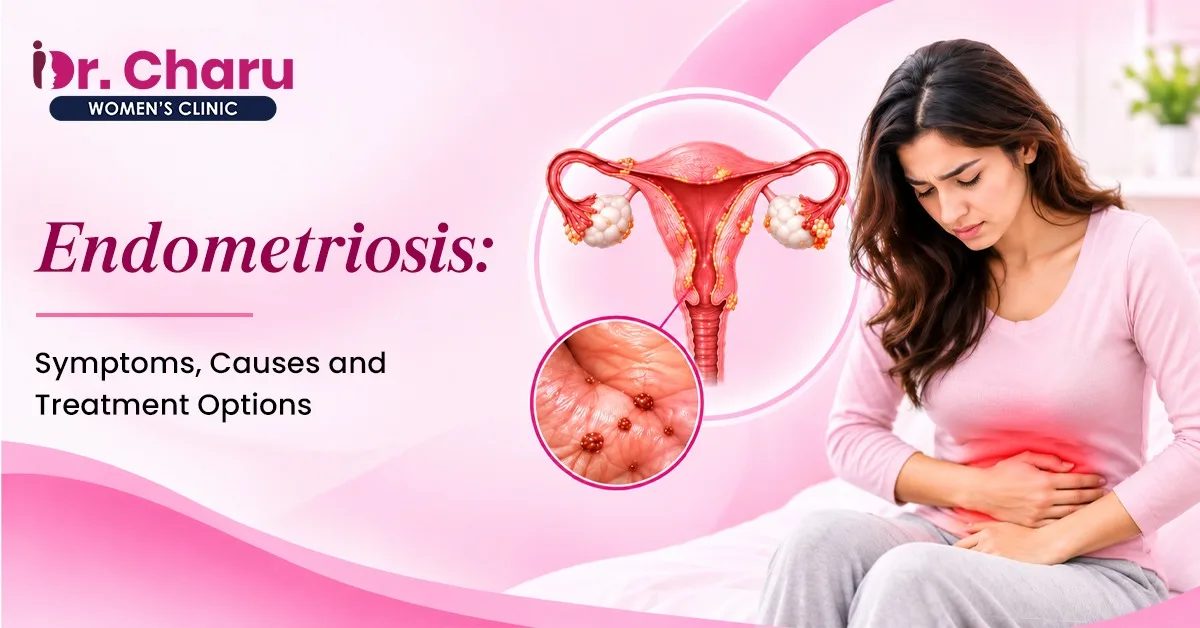
Is severe period pain always normal? No, it isn't, and that's something far too many women find out years later than they should. Painful periods that stop you from going to work, school, or just getting through the day can sometimes be a sign of endometriosis. It is a condition where tissue similar to the womb lining grows in places it shouldn't. This post covers what endometriosis actually is, the symptoms to look out for, what causes it, and what endometriosis treatment in Jaipur looks like.
What Is Endometriosis?
Endometriosis happens when tissue similar to the lining of the uterus starts growing outside it: on the ovaries, fallopian tubes, the lining of the pelvis, or occasionally other areas. This tissue responds to hormones just like it would inside the womb. It swells, breaks down and bleeds with each cycle. But unlike the womb lining, this tissue has no natural means of being expelled from the body. This causes pain, inflammation and, over time, scar tissue.
What Are the Symptoms of Endometriosis?
The most common endometriosis symptom is pelvic pain that gets significantly worse around periods. What makes it trickier to spot is that symptoms vary a lot between women; some have severe pain with minimal tissue involvement, others have extensive disease and barely notice it.
Symptoms to look out for:
-
Period pain that gets in the way of daily life
-
Persistent pelvic pain or lower back pain
-
Pain during or after sex
-
Heavy periods or irregular bleeding
-
Pain when passing urine or stools during your period
-
Bloating, especially around the time of your period
-
Ongoing fatigue
-
Difficulty getting pregnant
If several of these sound familiar, it's worth talking to a gynaecologist rather than waiting to see if things improve on their own.
Normal Period Pain or Endometriosis?
Some cramping at the start of a period is completely normal. What isn't normal is pain that becomes debilitating, sends you to bed with a hot water bottle every month or makes you dread your cycle. That kind of pain should be taken seriously, not managed with more painkillers and patience. The difference isn't always obvious from the inside, which is partly why endometriosis pain takes so long to diagnose.
|
Parameter |
Usual Period Pain |
Possibly Endometriosis |
|
Pain Level |
Mild to moderate, manageable |
Severe, often disrupts daily activities |
|
Pain Pattern |
First 1-2 days of period |
Before, during and after period; sometimes constant |
|
Other Symptoms |
Usually none beyond cramps |
Painful sex, bowel issues, fatigue, bloating |
|
Response to Rest and Basic Pain Relief |
Generally settles with rest and standard pain relief |
Minimal or short-lived relief, often worsens over time |
If your pain feels closer to the right column, learning how to reduce period pain naturally may help you manage your symptoms while you wait for a consultation.
What Causes Endometriosis?
Endometriosis causes aren’t fully understood yet. What is clear is that it isn't caused by anything a woman did or didn't do.
Possible Causes
A few theories exist. One is retrograde menstruation, where period blood flows backwards through the fallopian tubes instead of leaving the body, carrying uterine cells with it. Hormonal factors also play a role, since the condition is driven by oestrogen. There's also thought to be an immune system component, where the body doesn't clear this misplaced tissue the way it normally would.
Risk Factors
Certain things make endometriosis more likely, though none of them is definitive. A family history of the condition is probably the strongest risk factor. Starting periods early, having short menstrual cycles, or having never been pregnant are also associated with a higher likelihood.
Can Endometriosis Affect Fertility?
Endometriosis and infertility are connected for some women, but the situation is often more manageable than many people anticipate. The condition can make conceiving more difficult, particularly in moderate to severe cases, by affecting the ovaries, fallopian tubes or the environment in the pelvis. That said, many women with endometriosis do conceive naturally, especially when the condition is diagnosed and managed early.
If you've been trying to get pregnant without success, it's worth getting checked. Early guidance makes a real difference. Our infertility treatment services can help you understand your options.
How Is Endometriosis Diagnosed?
There's no single blood test for endometriosis, which is part of why it gets missed. A thorough history of your symptoms is usually the starting point, followed by a pelvic examination. Ultrasound can identify ovarian cysts linked to endometriosis, though it doesn't show all forms of the condition.
A definite diagnosis often requires laparoscopy for endometriosis, a keyhole surgical procedure that lets the doctor look directly at the pelvic area and take a tissue sample. Many women wait years before getting here simply because their pain kept being attributed to normal periods. If your symptoms have been dismissed before, it's worth seeking a second opinion.
Stages of Endometriosis
Endometriosis is typically classified into four stages: minimal, mild, moderate and severe, based on how much tissue is present and where it's located. One thing that often surprises people is that stage doesn't reliably predict pain. Someone with minimal endometriosis can be in significant discomfort, while someone with severe disease might have milder symptoms. Stage is useful for planning treatment, but it doesn't tell the whole story of how a woman is affected.
What Are the Treatment Options for Endometriosis?
Endometriosis treatment depends on your symptoms, your age, and whether you want to get pregnant now, later or not at all.
Pain Management and Hormonal Treatment
For women managing pain without immediate fertility plans, your doctor may recommend anti-inflammatory medication or hormonal treatments. These don't cure endometriosis; they can significantly reduce symptoms and slow its progression.
Laparoscopic Surgery
When symptoms are severe, diagnosis is uncertain, or fertility is a concern, laparoscopic surgery is often recommended. This is a minimally invasive keyhole procedure that allows the surgeon to both confirm the diagnosis and remove endometriosis tissue at the same time. The cuts are small, recovery is generally quicker than open surgery, and many women notice significant improvement in pain levels afterwards.
|
Dr. Charulata Bansal's Insight “Endometriosis is a lot more common than most women realise, and it's very much manageable. What concerns me is how long many patients wait before they come in, sometimes a decade of monthly pain, because they were told it was normal. It isn't. If your periods are severely affecting your quality of life, please don't keep putting off a check-up. Early evaluation genuinely changes what's possible.” |
Lifestyle Tips to Ease Endometriosis Symptoms
Lifestyle changes won't treat the underlying condition, but they can make symptoms more manageable day to day.
-
A hot water bottle or heating pad on the lower abdomen helps with cramp pain for many women.
-
Gentle, regular exercise, walking, yoga and swimming, can reduce inflammation and improve mood, particularly in the weeks before a period.
-
Eating a varied, balanced diet with plenty of vegetables and limiting alcohol and caffeine may also help.
Getting enough sleep and managing stress matter more than they're usually given credit for. These aren't replacements for medical care, but they're a reasonable part of looking after yourself alongside it.
When Should You See a Gynaecologist?
If your period pain is regularly disrupting your day, your sleep or your ability to work, you must seek professional help. You should also consult a specialist if you're experiencing pain during sex, struggling to conceive, or noticing persistent pelvic pain that doesn't correspond with your menstrual cycle. These aren't symptoms to wait out.
Conclusion
Endometriosis is common, and it's treatable. If you have experienced painful periods for years and have been advised to consider them a normal part of menstruation, seeking a proper medical assessment is important. Early diagnosis opens up more options and usually leads to better outcomes. You don't have to keep managing this on your own. If any of the symptoms in this post sound familiar, speaking with a gynaecologist is a reasonable next step. Consult the best gynaecologist in Jaipur for an accurate assessment and appropriate medical guidance.
FAQs
Is endometriosis a serious condition?
It can significantly affect quality of life, fertility and daily functioning. It's not life-threatening, but it's not a condition to ignore either.
Can endometriosis be cured completely?
There's no permanent cure, but symptoms can be effectively managed. Surgery can remove tissue and provide relief, though the condition may return in some cases.
Can you get pregnant with endometriosis?
Many women with endometriosis do conceive. Fertility outcomes depend on the extent of the condition and your individual circumstances.
Does endometriosis go away after menopause?
Symptoms usually reduce after menopause since the condition is hormone-driven. It doesn't always disappear entirely.
Is surgery always needed for endometriosis?
Milder cases are often managed with hormonal treatment and pain relief. Surgery tends to be recommended when pain is severe.