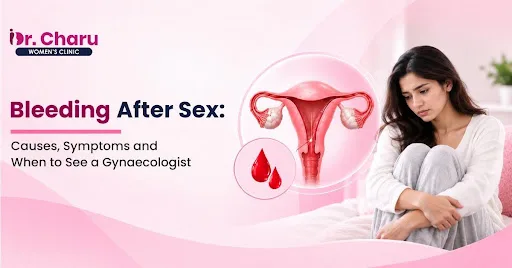
Is bleeding after sex normal? Sometimes it is, and most of the time the cause is minor, such as dryness or a little friction on delicate tissue. Even so, it is worth understanding, because the body rarely bleeds without a reason. Many women feel worried or embarrassed about it, and that is completely understandable. This guide explains what usually causes it, which signs deserve attention and when a visit to the gynaecologist makes sense, so you can feel calm, informed and ready to act.
Is Bleeding After Sex Normal?
It can be, but it should not be ignored if it keeps happening. Many women notice spotting after sex once in a while, usually because of dryness or friction. A single episode of bleeding that stops quickly is rarely a concern. What matters is the pattern, so noting how often it happens and how heavy it is can help a lot.
Why Does Bleeding After Sex Happen?
Bleeding happens after sex usually because delicate tissue in the vagina or on the cervix gets irritated. Doctors call this postcoital bleeding, and the cause can range from simple irritation to something that needs a closer look. The two groups below explain the difference.
Common, Usually Minor Causes
Many women ask why do I bleed after sex, and the answer is often simple. In most cases, the reason is one of the following minor issues:
-
Vaginal dryness or too little arousal can cause tiny tears in the tissue.
-
Hormonal changes, such as those during breastfeeding or perimenopause, can thin the vaginal lining.
-
Mild infections or cervical irritation can cause light bleeding that settles with care.
-
Rough friction or a new position can bruise sensitive tissue.
These causes usually settle quickly and respond well to simple care.
Causes That Need a Proper Check
Some causes need more than reassurance. Among bleeding after sex causes, a few deserve a proper evaluation:
-
Cervical polyps, which are small, soft growths that bleed easily
-
Cervical ectropion, where delicate cells sit on the outer surface of the cervix
-
Infections that keep returning or do not clear on their own
-
Rarely, changes in the cervix, including cancer, which is why early evaluation matters
Most findings are treatable, especially when caught early, so there is no need to panic.
Is It Spotting After Sex or Your Period Starting?
It usually comes down to timing and flow. Period blood is typically heavier, lasts several days and comes with cramps or a dragging feeling. Spotting is lighter, often pink or brown, and fades within a day. If intercourse happens close to an expected cycle, the two can overlap. For anyone wondering whether intimacy during a period is safe, our guide on sex during periods covers the benefits, risks and practical tips.
Warning Signs You Shouldn't Ignore
Most episodes are harmless, but certain patterns call for a prompt visit. If bleeding after intercourse comes with any of the following, it is wise to book a checkup soon:
-
Repeated bleeding
-
Pelvic pain
-
Unusual discharge
-
Bleeding between periods
-
Bleeding after menopause
-
Fatigue or weight loss
Having one of these does not mean something serious is happening. It simply means a professional opinion will help.
Occasional Spotting vs Bleeding That Needs Evaluation
The difference lies in the pattern, not just the amount. A light, one-off episode is rarely worrying, while recurring or heavier bleeding with other symptoms deserves evaluation. This table shows how the two usually compare.
|
Occasional / Minor |
Needs Evaluation |
|
|
Frequency |
Once in a while, not every time |
Repeated, or happens most times |
|
Amount |
Light pink or brown spotting |
Heavier, bright red or needing a pad |
|
Other Symptoms |
None, settles within a day |
Pain, discharge, fatigue or weight loss |
|
Life Stage |
Reproductive years, after a clear trigger such as dryness |
After menopause, or at any age if it keeps returning |
When Should You See a Gynaecologist?
Book a visit if bleeding after sex:
-
Happens more than once
-
Lasts longer than a day
-
Comes with pain or discharge
Anyone past menopause should not wait, since any bleeding at that stage needs checking. Bleeding between cycles is another reason to book, particularly alongside irregular periods, because both can point to the same underlying cause. Booking early usually means simpler answers and quicker relief, and a short consultation can settle weeks of worry.
What to Expect at the Clinic
Expect a calm, private conversation first. The gynaecologist will ask about the cycle, symptoms, contraception and when the bleeding occurs. A gentle pelvic and cervical examination usually follows, and pausing at any point is always fine. Depending on the findings, simple gynaecological tests may be suggested, such as:
-
A Pap smear to check the cervical cells
-
A vaginal swab to look for infection
-
An ultrasound to view the uterus and ovaries
Nothing is done without an explanation first, and most visits are short. Patients usually leave knowing the likely cause and the next steps.
Doctor's Insight
Most causes found in the clinic are small and treatable. Please do not delay a check-up out of embarrassment, because every question has been heard before and nothing will come as a surprise. Early reassurance is always kinder than months of worry.
-
Dr. Charulata Bansal
What You Can Do in the Meantime
Keep things gentle and keep a record while waiting for an appointment. These small steps help:
-
Use a lubricant if dryness seems to be a factor, and allow enough time to feel relaxed.
-
Avoid intercourse until an examination is done if the bleeding keeps recurring.
-
Note when the bleeding happens, how much there is and any other symptoms.
-
Avoid douching or harsh scented products, which can irritate the area further.
A written record helps the doctor reach answers faster.
FAQs
Is bleeding after sex normal?
It can happen occasionally and is often due to dryness or friction. If it recurs or comes with pain or discharge, it is best to get checked.
Can bleeding after sex happen during pregnancy?
Yes, because the cervix becomes softer and gets more blood flow. Any bleeding in pregnancy should still be mentioned to a doctor promptly.
Is bleeding after sex a sign of cancer?
Rarely. Most cases have simple, treatable causes, but a persistent pattern should always be examined so that serious causes can be ruled out early.
Can vaginal dryness cause bleeding after sex?
Yes, dryness is one of the most common causes, since friction can create tiny tears. Persistent dryness is worth discussing with a doctor, as it is treatable.
About the Author
Dr Charulata Bansal is a Consultant Obstetrician and Advanced Gynaecological Laparoscopic Surgeon (MBBS, MS, DNB, FMAS, FICMCH) with 13 years of experience. She has performed over 1,000 successful surgeries, practises at Cocoon Hospital and runs Dr Charu Women's Clinic in Jaipur. A former Assistant Professor at SMS Medical College, she was also felicitated with a gold medal by former President Dr A.P.J. Abdul Kalam.
Conclusion
Bleeding after sex is common and often minor, but repeated episodes, pain, unusual discharge or any bleeding after menopause should always be checked. Understanding the pattern, keeping simple notes and acting early can bring real peace of mind. If something feels unusual, trust that instinct and do not wait. For friendly, unhurried care, book a consultation with the best gynaecologist in Jaipur.