
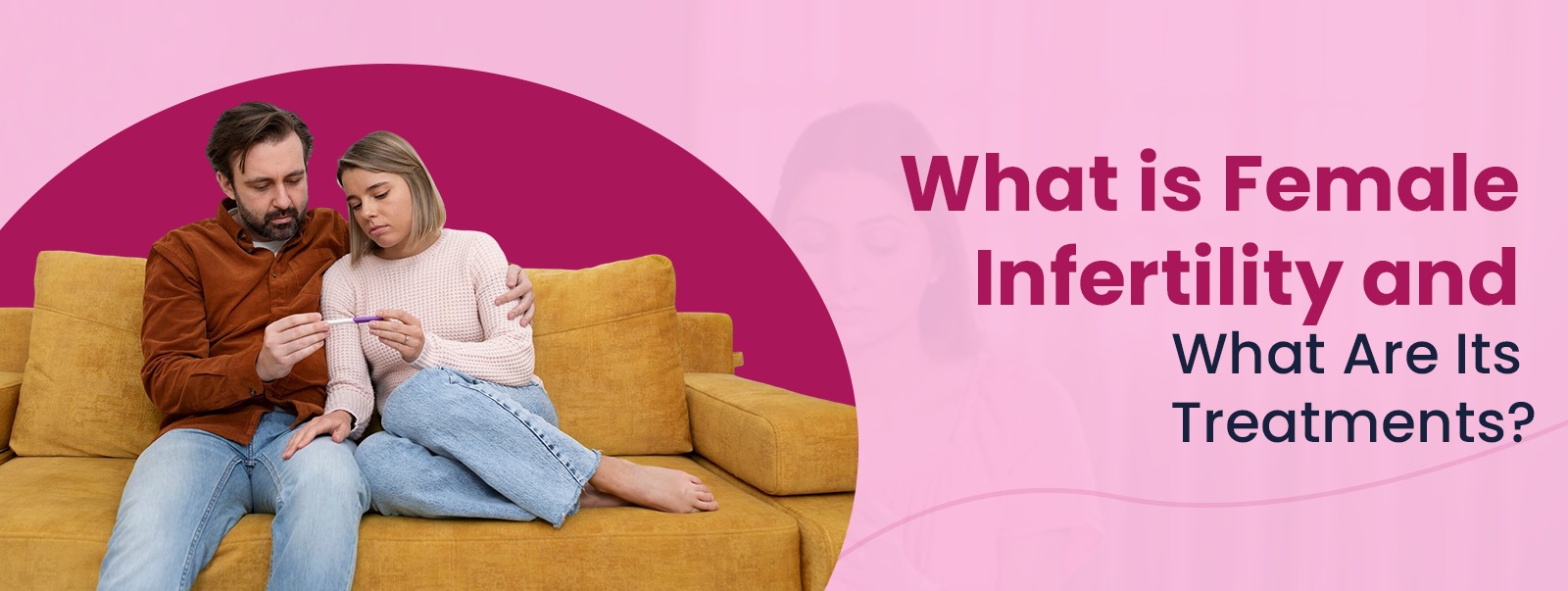
It can be irritating and agonizing when a couple attempts to have a baby yet after a long period of months in the attempts to become pregnant, this does not occur. Female infertility is one of the reasons why this struggle takes place. In easy terms, female infertility is an indication that a woman is not easily conceiving a baby in a natural way.
In places, such as Jaipur, women currently discuss matters related to fertility openly and seek consultation with the finest gynaecologist in Jaipur. When the couples are guided and treated properly, they can have their dream of having a family of their own. We will take this subject, one step after another, in the easiest manner.
What Is Female Infertility?
Female infertility refers to the inability of a woman to conceive despite engaging in regular attempts that take one year with no birth control. In case a woman is more than 35 years old, the doctor normally recommends consultation after 6 months of attempts.
Pregnancy happens when:
• The ovary releases an egg.
• The sperm meets the egg.
• The egg fuse becomes attached to the uterus.
In case any of these processes fail to occur in an appropriate manner, then pregnancy might not take place. It is at that point that medical advice is necessary.
A skilled and qualified female physician in Jaipur would be able to identify the cause and recommend the appropriate therapy.
Common Causes of Female Infertility
According to clinical experience and typical cases of patients, many reasons can cause infertility to occur. Here are some of them in a nutshell.
1. Ovulation Disorders
The mechanism by which the ovary discharges an egg on a monthly basis is known as ovulation. Unless this occurs on a regular basis, pregnancy is complicated.
Common problems include:
• Irregular periods
• Polycystic Ovary Syndrome (PCOS) is a condition in which testosterone and estrogen levels are high but ovulation rates are low (Cianca et al, 2007, p.623).
• Hormone imbalance
There is no egg to fertilize without ovulation. It is one of the most prevalent causes that the best female gynaecologist in Jaipur has witnessed.
2. Blocked Fallopian Tubes
Fallopian tubes refer to small tubes through which the ovaries are attached to the uterus. They assist in the movement of the egg and the sperm.
If these tubes are blocked:
• The egg and sperm cannot meet.
• The pregnancy is not possible naturally.
Blockage of tubes may be as a result of:
• Past infections
• Pelvic inflammatory disease
• Previous surgeries
3. Endometriosis
Endometriosis is a disorder in which the tissue like the one that lines the uterus is grown outside the uterus.
It can cause:
• Severe period pain
• Heavy bleeding
• Fertility problems
This may bring about effects on the ovaries and tubes which results in difficulty in conception.
4. Uterine Abnormalities
Pregnancy takes place in the uterus where the baby develops. In case of structural issues, it can have implications on implantation.
Some examples include:
• Fibroids
• Polyps
• Congenital (not acquired) abnormalities.
Due to medical treatment or surgery, these issues can be corrected sometimes.
5. Age Factor
Age is a very significant aspect in fertility. Women are born with a given number of eggs. As age increases:
• The number of eggs decreases.
• There is also a decrease in the quality of eggs.
The fertility begins to decline gradually after the age of 35. That is the reason why a lot of doctors recommend against excessive planning of pregnancy.
6. Lifestyle Factors
There are cases when even such ordinary routine practices may influence fertility.
These include:
• Smoking
• Excess alcohol
• Obesity
• Very low body weight
• High stress
• Lack of sleep
Little changes in lifestyle can be a lot.
When Should You Consult a Doctor?
On the one hand, it is only natural to make an attempt during several months without panic. Yet there are symptoms that predict that you need to visit a doctor earlier.
You need to visit a gynaecologist in case:
• You tried 1 year (or 6 months above 35 years).
• Your cycles are very incoherent.
• You are very painful during your periods.
• You are known to have a history of miscarriage.
• You have had PCOS or thyroid.
Most couples are embarrassed and intimidated to talk about fertility. However, a conversation with the most qualified gynaecologist in Jaipur can help to ease the mind.
How Is Female Infertility Diagnosed?
One-day diagnosis is not made. It is typically a number of steps.
Doctors may suggest:
• Detailed medical history
• Blood tests to test hormones.
• Ultrasound scan
• Ovulation tracking
• Hysterosalpingography (HSG) in order to monitor the obstruction of tubes.
A semen test is also recommended at times to the husband. Fertility is not a concept of the woman alone; the partners are equally important in fertility.
In Jaipur a loving woman doctor will tend to explain every examination well to make the couple feel comfortable and knowledgeable.
What Are the Treatments for Female Infertility?
The cure always lies in etiology. There is good news though that today there are numerous safe and effective choices in the field of gynecology.
Let us get them in simple terms.
1. Lifestyle Modifications
This is often the first step.
Doctors may suggest:
• Eating in a healthy way.
• Eating balanced meals
• Regular exercise
• Reducing stress
• Stopping smoking
In some cases, normal ovulation can be recovered by simply correcting lifestyle.
2. Ovulation Induction Medicines
In case ovulation does not occur on a regular basis, physicians can prescribe medications that aid the ovary in releasing ova.
These medicines:
• Stimulate egg growth
• Increase the chances of pregnancy.
The procedure is monitored with a lot of care using ultrasound in order to prevent complications.
3. Hormonal Therapy
Hormone treatment can be recommended in case the imbalance of hormones causes infertility.
This helps:
• Regulate menstrual cycle
• Improve egg quality
• Support pregnancy
Hormonal therapy is administered on a medical basis.
4. Surgical Treatment
In the event of structural issues such as fibroids, polyps or blocked tubes, then surgery might be necessary.
Common procedures include:
• Laparoscopy
• Hysteroscopy
They tend to be minimally invasive in nature and therefore time taken to get back is less.
5. IUI (Intrauterine Insemination)
In IUI:
• Sperm is inserted straight up the uterus at ovulation.
• This enhances the possibility of conception.
It is an uncomplicated and less invasive form of treatment with fertility.
6. IVF (In Vitro Fertilization)
One of the most developed fertility treatments is IVF.
In IVF:
• Eggs are retrieved in the ovary.
• They get spermiculated in a laboratory.
• Embryo is then inserted into the uterus.
Millions of couples across the world have benefited with the help of IVF. The success, however, is dependent on numerous factors such as age and the general health.
A qualified and most suitable female gynaecologist in Jaipur takes the patients through this trip.
Emotional Impact of Infertility
Infertility is not a medical problem only. It affects emotions deeply.
Many women feel:
• Guilt
• Sadness
• Anxiety
• Social pressure
Women are usually blamed unjustly in Indian society, particularly. This can be very painful.
It is important to remember:
• The fact that people are not fertile is not a fault of anyone.
• Both partners will have equal responsibility.
• Emotional support is as important as medical treatment.
Being open with your partner and doctor will help you to minimize stress.
Expert Insight by Dr. Charu Lata Bansal
Arguably, it is all about early consultation as stated by Dr. Charu Lata Bansal. Most couples take an excessive amount of time due to reluctance or intimidation. However, infertility is a condition which is treatable in most instances.
She emphasizes:
• Timely diagnosis
• Personalized treatment
• Emotional counseling
• Honest communication
Her practice is not only based on medical therapy, but also on emotional support of couples at this sensitive period.
Can Female Infertility Be Prevented?
Fertility can be safeguarded by some measures although not all the reasons are avoidable.
You can:
• Maintain a healthy weight.
• Avoid smoking.
• Manage stress.
• Treat infections early.
• Undergo frequent gynaecological examinations.
Frequent consultation with a reliable female physician in Jaipur will enable issues to be noticed.
Myths About Female Infertility
Infertility is also associated with a good deal of misconceptions. Let’s clear some common myths.
Myth 1: Infertility is always a woman’s fault
This is not true. In lots of situations, male factors are also equally guilty. Fertility is a shared issue.
Myth 2: IVF always guarantees pregnancy
IVF enhances the probability, but not success. There are several factors which influence results.
Myth 3: Stress alone causes infertility
Hormones may be influenced by stress, but hardly on its own. Infertility normally is a result of medical causes.
Knowing the truth can be used to diminish useless fear.
Final Thoughts
The presence of female infertility may be intimidating. However, nowadays medical science has developed greatly, and a good number of reasons can be addressed.
The most significant one is not to neglect the issue. In case you have been trying in vain to conceive, consult the best gynaecologist in Jaipur. Timely intervention can be the way to achieve better outcomes.
Keep in mind there is nothing wrong with seeking assistance. It is a step toward hope.
Being a parent is a wonderful experience, and given the proper support and treatment most couples manage to find a way out.
Do not despair in case you or your acquaintance are having fertility issues. Through proper medical care, moral encouragement and patience, a great number of couples are able to get through pregnancy. The initial positive step to a brighter future can be contact with a loved and experienced specialist.
The most common questions (FAQs)
1. What is the most frequently used cause of female infertility?
The most widespread factors of female infertility are ovulation disorders, in particular, PCOS.
2. Is infertility natural and curable?
In others, fertility can be enhanced through lifestyle modifications such as weight control and elimination of stress. Nonetheless, treatment might be required in case of medical reasons.
3. To what length should we wait before visiting the doctor?
At the age of below 35 years, couples ought to make an attempt of one year. In case the woman is over 35, visit the doctor after six months of attempts.
4. Is IVF painful?
IVF incorporates a few injections and small procedures, and most of the women can tolerate it. Physicians make the right precautions to minimize pain.
5. Does age influence female fertility?
Yes. The natural rate of fertility is negative (ages 35 and older). The quality and quantity of eggs decrease with time.
6. Can blocked tubes be treated?
Yes. Blocked tubes may be surgically treated sometimes depending on the circumstances. In other instances, IVF can be advised.